Light Industrial Space for Sale Singapore: What B1 Zoning Enables for Clean Operations
If you are shopping for a light industrial space for sale in Singapore, the zoning label is not a bureaucratic detail. It is a practical constraint on what you can run inside the unit, what you can claim as “industrial use” in the eyes of regulators, and how cleanly your operations can scale without triggering headaches later.
That is why B1 industrial property Singapore keeps coming up in conversations between business owners, operators, and investors. B1 is designed for clean industry and uses that generally sit closer to the urban fabric, instead of the heavy, high-nuisance activities that need strong buffers. When you understand what B1 allows, you can align your trade, fit-out approach, and long-term plan with the rules from day one, rather than discovering conflicts after you have already signed.
Below is a field-level way to think about B1 zoning, what “clean operations” really means under B1, and the trade-offs you should expect when comparing B1 vs B2, freehold vs leasehold industrial Singapore, and strata industrial units Singapore options.
What B1 zoning is really for, and why “clean” matters
B1 industrial zoning is intended mainly for clean industry, light industry, warehouses, public utilities and telecom uses. The key word is “clean” because the regulatory intent is to permit certain industrial activities while reducing nuisance risks to nearby land uses.
URA’s B1 development control guidance also implies a nuisance buffer logic: uses that need a nuisance buffer of more than 50m are generally not allowed. That threshold matters in real life. It forces a reality check on trades that involve high noise, heavy odour, high emissions, or other nuisance factors that would normally require more separation.
For operators, this is not only about whether your activity sounds “industrial.” It is about whether your activity can sit within an environment designed for limited nuisance. For investors, it becomes a question of defensibility: will the unit remain usable and fundable when tenants rotate, product lines change, or buyer demand shifts?
B1 is also built around the idea that industrial is not optional. URA states at least 60% of the floor area or GFA in a B1 development or strata unit must be used for industrial purposes. The remaining area is limited to ancillary or supporting uses and approved secondary uses. In other words, a B1 unit cannot be repurposed into something that is mostly non-industrial and still be treated as a straightforward “industrial asset.”
That 60% floor area requirement is the difference between a flexible asset and a constrained one. It affects how you plan your workspace, where you place storage, how you allocate production versus office, and what “supporting” really looks like in practice.
If you are buying industrial property Singapore for operating use, the 60% rule is your anchor. If you are buying for investment, it influences tenant fit because not every business can credibly operate at that industrial quantum.
The B1 use-quantum rule and how it shapes your everyday operations
When people talk about B1 zoning, they often focus on allowed business types. That is important, but the operational challenge is usually spatial. URA’s requirement that at least 60% of GFA be used for industrial purposes is not something you can wave away with a business licence alone.
In a real fit-out, you typically end up thinking in zones: production and processing areas, packaging and goods preparation areas, storage, and the more administrative portions such as office and meetings. Under B1, those allocations must be consistent with the industrial quantum rule.
URA’s B1 guidance on use quantum and the allowable-use framework point to the general direction: B1 units commonly suit light manufacturing, food packing and processing-related uses, e-business, printing and publishing, media and similar clean uses. Some non-industrial uses may need separate approval or are constrained.
So the question becomes, are you running a “clean factory” with real production, or are you running a service office with occasional industrial activity? That distinction is usually felt at the planning stage, during lease discussions, and later when tenants ask whether the premises can continue to support their trade.
A small anecdote that comes up frequently in due diligence conversations: companies sometimes onboard a new product line, then later realise their reconfigured space is now more showroom-like or more “back-office heavy.” Even if the company insists it is still “industrial,” the practical layout can drift away from what regulators consider industrial use. With B1, that risk is managed by designing from the beginning, not by trying to retrofit after operations change.
B1 vs B2 industrial zoning: the practical trade-off
B1 and B2 industrial zoning are often compared as if they are only about the “size” of the business. In reality, the difference is about the nature of use and the level of nuisance and technical intensity implied by the category.
The context is clear: B1 is the category for clean and light industrial uses, while B2 is the heavier-industrial category. JTC materials and unit listings for B2 show patterns that reflect heavier use potential, such as different height specs and floor loading. One unit example shows B1 flatted factory listings versus B2 listings that include distinct technical parameters, which is a strong practical signal that B2 is designed for trades that may require more structural capability and more operational intensity.
That is the heart of the trade-off:
- If your processes are genuinely light and clean, B1 can fit neatly. It is intended to support those operations without forcing you into a heavier industrial spec that you may not need.
- If your processes trend toward heavier industrial requirements, B2’s technical and use characteristics may be more aligned, but it also narrows the universe of acceptable tenant trades in many cases.
From an investment standpoint, B1 vs B2 influences tenant pool and resale liquidity. Industrial property can be sensitive to approved use and trade fit, and liquidity is often tied to whether the next operator can actually use the space as intended.
If you are evaluating B1 industrial property Singapore, a useful mental model is: B1 is “clean operations with constraints.” B2 is “heavier operations with different constraints.” Neither is universally better, the match matters.
City-fringe industrial precincts and why B1 often shows up there
You may have noticed that some buyers prefer city-fringe industrial property Singapore because it is closer to workforce catchments and transport links. The URA planning context also shows B1 industrial clusters around city-fringe MRT areas.
That is why names like Tai Seng industrial property and Paya Lebar industrial property often come up in discussions around clean industrial operations and urban logistics. The underlying logic is not just convenience. It is about aligning an industrial use category with an urban location where nuisance tolerance is lower.
For many e-business and light manufacturing operators, proximity reduces the friction of staffing and last-mile movement. For investors, it can mean stronger demand from tenants whose workdays depend on daily accessibility rather than long-distance trucking alone.
That said, city-fringe appeal does not erase zoning reality. If your operations need buffers beyond what B1 is designed to accommodate, you are fighting the framework. B1 clusters simply mean the planning system already expects certain kinds of clean and light industrial activity to fit these areas.
Strata industrial units under B1: flexibility you can plan for, and constraints you must respect
Strata industrial units Singapore are popular because they let businesses buy smaller “industrial rooms” inside a larger building. But strata ownership under B1 adds another layer: the 60% industrial quantum requirement is specifically called out for B1 developments or strata units.
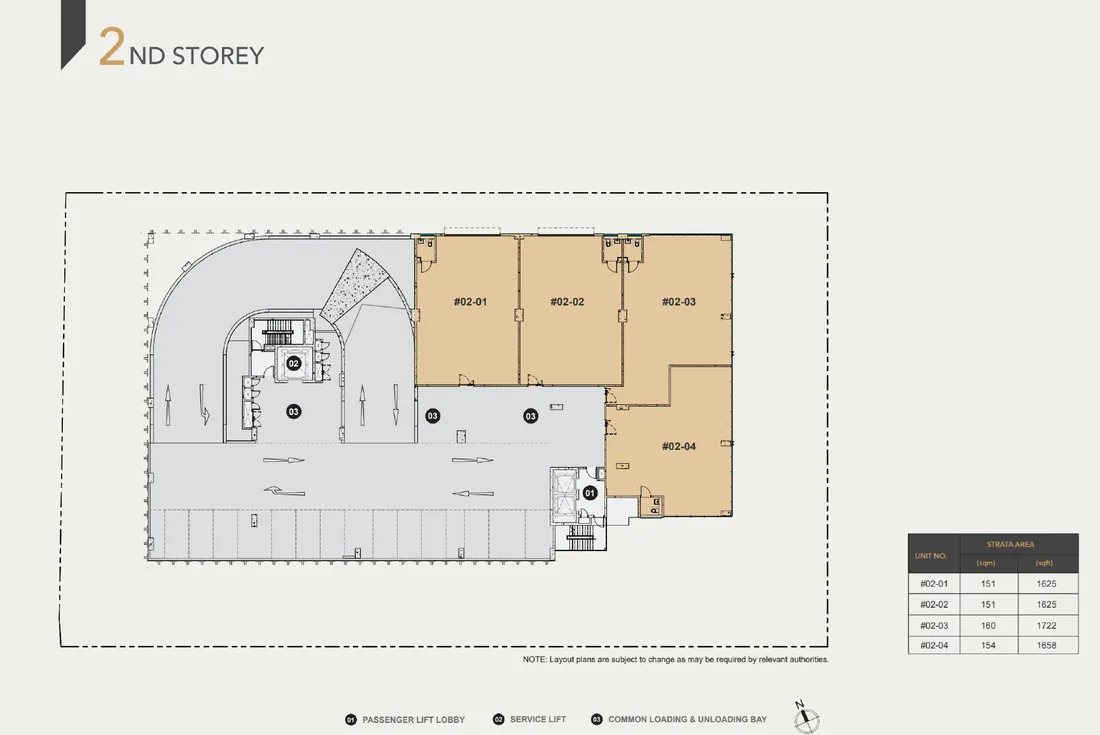
Practically, that means the building and the unit are judged on industrial usage in aggregate and within unit compliance. If you are considering strata, you cannot treat your space as independent of the building’s overall intent.
That leads to an important due diligence mindset: verify the approved use for the unit and ensure your intended trade matches the approved use direction. The context on B1 allowable uses highlights that some non-industrial uses need separate approval or are constrained. You want your business to sit comfortably inside that approved-use envelope.
If you are an investor, pay attention to tenant turnover risk. When a tenant leaves, the next tenant is not “any tenant,” it is a tenant whose operations are compatible with B1’s clean-industry expectation and the industrial-use quantum. That trade-specific sensitivity is one reason industrial property rental yield Singapore discussions must include qualitative risk, not only numbers.
Ramp-up industrial units Singapore versus flatted factory layouts: logistics affects which “clean operation” performs best
Not all “light industrial” needs the same logistics design. Even within B1-eligible uses, your workflow determines whether you want direct truck access or you can operate efficiently through shared facilities.
The context on ramp-up factories is direct: ramp-up factories provide direct vehicular access to units for loading and unloading, while flatted factories are generally accessed via common corridors, lifts and loading bays. Layout choice affects logistics efficiency, truck access and fit-out flexibility.
If you run activities where goods movement is frequent, or where you need consistent loading routines, ramp-up can reduce daily friction. If your operation is more office-plus-packing, or if deliveries are less about trucks lingering at your unit and more about scheduled drop-offs, the flatted model may be workable.
This is not about comfort, it is about throughput. In due diligence, you can often tell how realistic your operating plan is by walking the loading route and imagining your actual daily schedule. Buyers who focus only on rent often underestimate how these physical differences impact operating costs and employee time.
Key technical checks for strata industrial units you should not skip
When you are buying industrial property Singapore, technical specs can decide whether the unit can support your trade without expensive workarounds. For strata industrial units, JTC’s unit guidance highlights key checks such as floor loading, ceiling height, goods-lift access, loading-bay provision, and whether the trade matches the approved use.
The reason to treat these items as “must verify” is simple. Zoning tells you what type of use is allowed, but technical capability tells you whether the use can run safely and efficiently.
A unit that looks suitable on paper might fail one of these checks. For example, a production approach that requires significant mechanical equipment will collide with floor loading or ceiling height constraints. A packaging model that relies on frequent internal movement can be constrained by goods-lift access or loading-bay availability.
Even if you are staying strictly within “clean” activities, equipment footprint matters. In light manufacturing, printing, media production, and packaging workflows, the “clean” part still requires real hardware and real material handling.
If you are comparing buy industrial property Singapore options, these technical checks often separate the units that feel easy to operate from the units that feel workable only in the imagination of a marketing brochure.
Freehold vs leasehold industrial Singapore: why “ownership” can change your exit plan
Freehold industrial property Singapore is relatively scarce. The context explains that much new industrial supply is on leasehold land, and JTC estate and unit pages commonly show lease terms like 60-year, 30-year or 20-year lease terms depending on the estate and product.
That scarcity changes how you should think about risk. With leasehold industrial, the remaining term can influence buyer appetite and financing decisions. With freehold industrial, you avoid the same “time-to-expiry” pressure, but you may find fewer options and a different pricing dynamic because supply is limited.
For an investor, the biggest practical question is not just, “Do I get freehold?” It is, “Can I exit cleanly in the time horizon that makes sense for my business plan?”
For an operator, the question becomes, “How stable is my operating base?” If you run equipment that needs years to amortise, leasehold can still work, but you should align the tenure with your expected equipment replacement cycle and growth plan. Buying under the wrong timeframe is a common way companies end up with painful relocation decisions.
Buying industrial property under a company name: what changes for stamp duty and what does not
Many investors buy industrial assets under a company name, especially when the property is used for business or held for investment. The context provided is specific Click here about stamp duty impacts: industrial property is not subject to Additional Buyer’s Stamp Duty (ABSD). ABSD applies to residential property acquisitions, while industrial transactions are instead subject to normal BSD rules. On disposal, seller’s stamp duty for industrial property can apply where applicable.
The stamp duty story matters in two separate moments: purchase and disposal.
On disposal, the IRAS Seller’s Stamp Duty (SSD) for industrial property is stated with holding period rates: 15% if sold within 1 year, 10% within 1 to 2 years, 5% within 2 to 3 years, and none after 3 years.
Those SSD rates are important because they shape how you should plan your exit. If your investment thesis expects a fast rotation, SSD risk becomes a real drag on returns. If your thesis assumes multi-year holding, SSD can be less of a worry, but you still need to verify the expected holding period against the SSD Space Nova 21 New Industrial Road timetable.
Also note GST treatment for new non-residential property: IRAS applies GST when buying from a GST-registered seller or developer. The context states that buyers of non-residential properties must pay GST if the seller is GST-registered. This matters at purchase time, and it can materially affect cash flow even if the property is “industrial” and “non-residential.”
The practical takeaway is to build your acquisition budget with all these components in mind, not just the headline purchase price.
Industrial property loan Singapore: financing still depends on your realities, not your marketing pitch
Industrial property loan Singapore is not just about “can I get financing.” In practice, lenders assess an investment based on their credit and risk frameworks. The provided context notes that financing for property investment depends on lender assessment and that non-residential loans are typically under commercial terms rather than residential housing-loan rules.
That means your underwriting story should be coherent. For operating use, lenders may look at your business fundamentals, lease structure if any, and the stability of income flows. For investors, they will focus on the asset’s durability and the tenant pool’s compatibility with the zoning and technical specs.
This is where B1 can help, but only if you genuinely fit. Because B1’s intended uses and 60% industrial-use quantum are clear, you can explain your operating plan in a way lenders can understand: the unit is designed for clean/light industrial activities, and your planned use aligns with that design.
If your business relies on a use category that sits near the edge of what B1 allows, financing can become harder. Not because zoning is “bad,” but because risk moves into uncertainty when approved use and operational reality do not line up cleanly.
Industrial property rental yield Singapore: what tends to drive yield outcomes in B1
Rental yield discussions for light industrial often focus on pricing and occupancy. But yield is also about how confidently the property can stay let to compatible trades.
B1’s 60% industrial-use requirement sets expectations for the kind of tenant that can use the premises. URA’s guidance on allowable uses points to common fit with light manufacturing, food packing/processing-related uses, e-business, printing/publishing, and media. Tenants within that range generally align more smoothly with the unit’s designed purpose.
The context also notes that industrial units can offer higher rental yields than residential in some cases, but resale liquidity is generally more trade-specific and sensitive to approved use, lease tenure, strata size and building specs. That is the key trade-off: you may see attractive yield indicators, but your exit optionality can be tighter because fewer buyers may qualify if the next operator’s business does not match the approved use.
So when you evaluate industrial property investment Singapore, think of yield as a function of two things: 1) what rent you can earn while you hold the unit, and
2) what rent and sale options you retain if tenant composition changes.This is why technical checks like floor loading, ceiling height, goods-lift access, and loading-bay provision should not be treated as “engineering trivia.” They directly impact the range of tenants who can operate there, which indirectly affects yield stability.
A buyer’s decision flow that works in the real world
When I see people shop for B1 industrial property Singapore, the best buyers tend to do three things early, before they fall in love with a unit’s aesthetics or a broker’s pitch.
First, they write down their exact operation as a workflow. What comes in, how often, by truck or by smaller vehicles, where it is stored, what gets processed where, and what the bottlenecks are. Ramp-up versus flatted layout is not abstract when you do that exercise.
Second, they test the workflow against B1’s intent. B1 is designed for clean industry and light industry, with warehouses, public utilities and telecom uses also within the broad framework. They sanity-check nuisance intensity against the nuisance buffer concept (uses requiring more than 50m buffers are generally not allowed). They also keep the 60% industrial-use quantum in mind, so their layout does not drift into mostly non-industrial use.
Third, they verify the technical checks for strata units, including floor loading, ceiling height, goods-lift access, and loading-bay provision, and they confirm that the trade matches the approved use direction. This is where many deals become either a “yes, proceed” or a “no, find another unit.”
If the unit passes these three tests, you can usually approach negotiation with far more confidence, because you are not relying on hope. You are relying on alignment.
Example scenarios: when B1 makes life easier, and when it becomes a constraint
Consider a company doing clean packaging and light processing that relies on frequent but manageable goods movement. In that case, a B1 unit that is technically suitable, with workable loading-bay provision and adequate goods-lift access (if strata access requires it), tends to align well. The company can keep most of the GFA dedicated to industrial use and treats offices as supporting areas.
Now imagine an operator whose “industrial” work is small but their space is largely office-oriented. Even if their business label sounds industrial, the 60% industrial-use quantum can become a stumbling block. B1 does not automatically prevent non-industrial space, but it does limit how much non-industrial area you can carry without approval and without running into use-quantum issues. That scenario is not a zoning impossibility, it is a compliance risk.
Finally, think about an e-business operation that requires clean workflows, printing or media production components, and coordination with shipments. B1’s commonly allowable directions around e-business, printing/publishing and media can fit. But if their process expands into something heavier and more nuisance-intensive, or if equipment needs exceed technical specs, the mismatch shows up fast. That is the kind of “future risk” you can plan for early by understanding what you are buying, not just what you plan to do next month.
These scenarios illustrate why B1 zoning enables clean operations. It is not a vague “permission slip,” it is a structured intent with measurable boundaries such as the nuisance buffer logic and the 60% industrial-use quantum requirement.
Final thoughts to guide your next viewing
If your target is light industrial space for sale Singapore, B1 is often a strong starting point because it is built for clean and light industry, and it clusters around city-fringe locations where urban access matters.
But your success depends on more than choosing “B1.” You must align your trade with approved use direction, build your space around industrial-use quantum expectations, and validate the technical capacity of the unit for your actual operating workflow. Then you can evaluate the business case with fewer surprises, whether you are thinking like a founder seeking stable premises, or like an investor weighing industrial property investment Singapore returns against trade-specific liquidity risk.
If you want, tell me your intended trade (for example, light manufacturing, packaging, printing, media, logistics support), whether you prefer strata or whole-unit layouts, and your rough preferred tenure (leasehold years remaining range or freehold only). I can help you map what to check first when comparing B1 vs B2, ramp-up industrial units Singapore versus flatted factories, and how to approach financing and stamp duty planning based on the rules above.